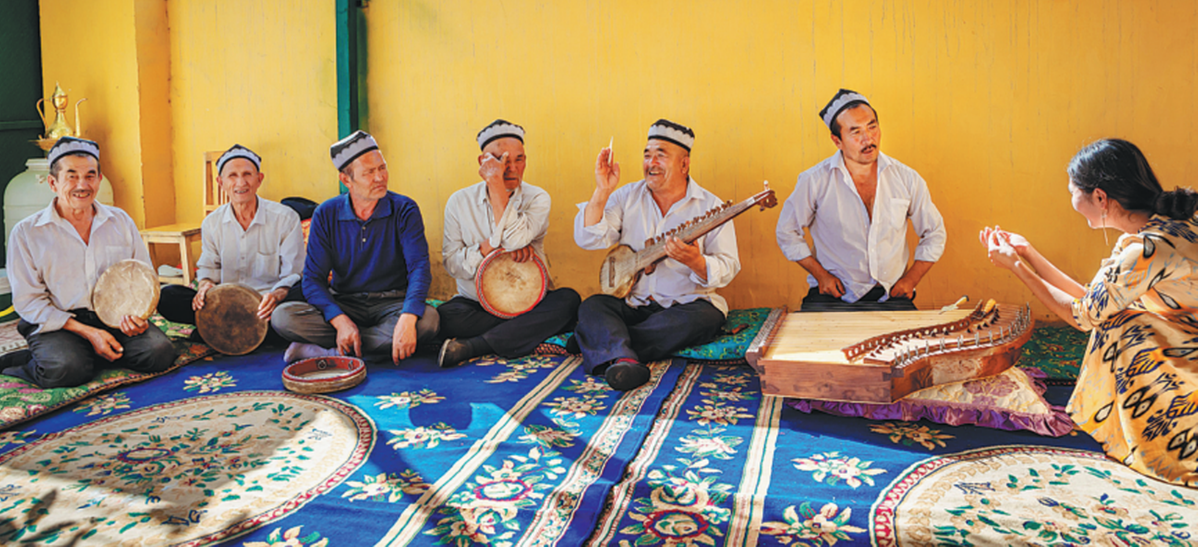
Xinjiang Uygur Muqam Art
Introduction
Xinjiang Uygur Muqam Art is an ancient art form that represents a profound synthesis of music, dance, and cultural expression originating from the Uygur community in Northwest China's Xinjiang Uygur autonomous region. It is a traditional cultural heritage that has been preserved and nurtured over centuries, showcasing the rich tapestry of Uygur cultural identity.
This art form is characterized by its intricate compositions, vibrant performances, and deep cultural significance. The birthplace of this magnificent tradition, Shache county, is often celebrated as the hometown of the 12 Muqams, reflecting its crucial role in sustaining and promoting these cultural treasures through dedicated institutions and community efforts.
It was inscribed on the Representative List of the Intangible Cultural Heritage of Humanity in 2008 (though it was originally proclaimed in 2005) by UNESCO.
History
The history of Xinjiang Uygur Muqam Art can be traced back to the mid-16th century, with its roots deeply embedded in the cultural evolution of the Uygur people. During this period, palace performers compiled folk melodies sung for millennia into 12 anthologies, which have come to be known as the 12 Muqams. This compilation marked a pivotal moment in the formalization and preservation of Muqam art, ensuring its transmission across generations. Shache county, in particular, emerged as a vital center for Muqam performance and preservation, becoming synonymous with the tradition itself.
Structure and Themes
Xinjiang Uygur Muqam Art is renowned for its elaborate structure and thematic richness, which are integral to its artistic expression and cultural resonance.
Musical Components
The musical components of Muqam art are complex and multifaceted, characterized by their intricate scores and elaborate compositions. Each of the 12 Muqams is a suite of songs that blend vocal and instrumental music, often beginning with a slow and melancholic introduction followed by livelier sections. The use of traditional Uygur instruments, such as the rawap and tambur, adds a distinct sound quality that is both evocative and culturally specific. The musical narrative often reflects themes of love, nature and the human condition, drawing from a vast repertoire of folk melodies and poetic texts.
Dance Elements
Dance is an integral component of Muqam performances, adding a dynamic and visual dimension to the art form. The choreography is characterized by its expressive movements and intricate footwork, often reflecting the emotive and narrative elements of the music. Dancers, adorned in traditional Uygur attire, bring the stories and emotions of the Muqam to life, engaging audiences through their graceful and spirited performances. The dance elements are carefully synchronized with the musical compositions, creating a harmonious interplay between sound and movement.
Notable Performances and Festivals
Notable performances and festivals play a crucial role in the celebration and promotion of Xinjiang Uygur Muqam Art. The 12 Muqams culture and art festival, inaugurated in Shache county, serves as a vibrant platform for showcasing the diverse talents of Muqam artists and engaging audiences with the splendors of this cultural gem. The festival attracts both local and international visitors, offering them a unique opportunity to experience the rich tapestry of Uygur music and dance. These events not only highlight the artistic excellence of Muqam practitioners but also reinforce the cultural significance of the tradition, ensuring its continued relevance and vitality in contemporary society.
Cultural Significance
Xinjiang Uygur Muqam Art holds profound cultural significance as a symbol of Uygur identity and heritage. It serves as a living repository of the historical and artistic expressions of the Uygur people, encapsulating centuries of cultural evolution and community life. Muqam art not only entertains but also educates and unites, fostering a sense of belonging and continuity among Uygur communities. As a cultural emblem, it represents the resilience and creativity of the Uygur people, contributing to the broader cultural diversity of China and the world.
Preservation Efforts
Over the centuries, the Muqam art form has been sustained by dedicated practitioners and local communities who have worked tirelessly to keep its melodies, dances and stories alive. The establishment of the Muqam Heritage Center in 2007 further underscored the commitment to preserving this cultural legacy, creating a dedicated space for training, rehearsals and performances.
Additionally, heritage preservation is supported through annual training programs, financial allowances for practitioners, and regular public performances, ensuring that the knowledge and skills associated with Muqam art are passed down to future generations. The community's dedication to preserving this intangible heritage is further exemplified by the organization of art festivals and competitions that celebrate and elevate the Muqam tradition.








